
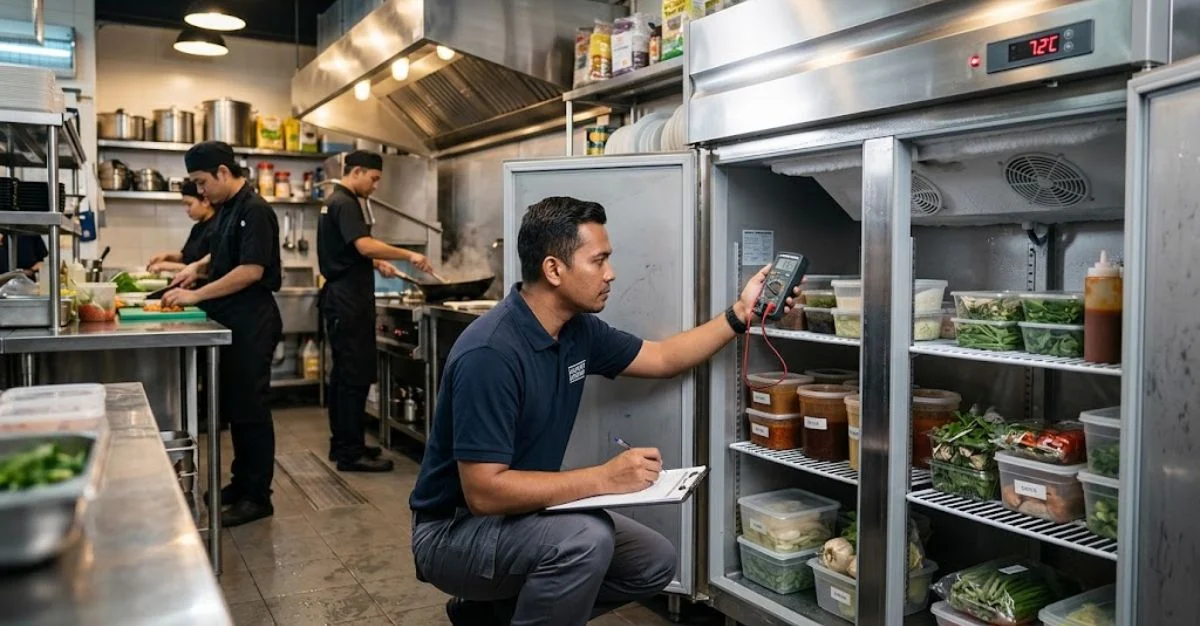
A commercial fridge that stops cooling can turn into spoiled stock, disrupted service and costly downtime within hours.
Common causes include dirty condenser coils, thermostat faults, low refrigerant and compressor failure.
Solid Cool has provided repairs for commercial refrigeration solutions across Malaysia since 1997. The checks below help identify why your fridge is suddenly not cold impacted by simple issues quickly and show when professional repair is needed.
Commercial Fridge Not Cooling: Why Business Units Fail Differently
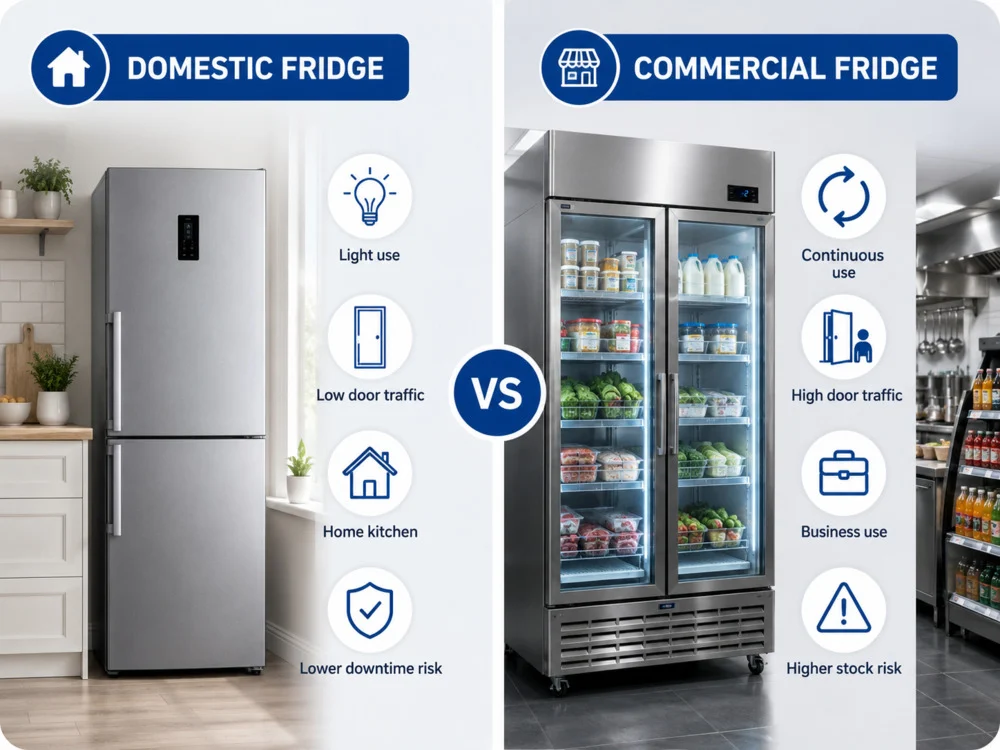
A commercial fridge not cooling is rarely a minor inconvenience.
In a busy restaurant, bakery or convenience store, the unit runs under constant pressure from frequent door openings, warm surroundings and long operating hours.
Dirt, grease and worn components also build up faster, turning a small performance drop into sudden cooling failure.
| Factor | Domestic Fridge | Commercial Fridge |
| Operating load | Runs in shorter cycles | Works continuously under heavier demand |
| Condenser condition | Dust builds up gradually | Grease and dust may collect quickly |
| Door openings | Opened several times a day | Opened repeatedly during operating hours |
| Impact of failure | Temporary inconvenience | Spoiled stock, disrupted service and lost sales |
| Maintenance needs | Basic annual servicing | More frequent inspection in high-use environments |
Commercial units face heavier daily use, so unusual noise, rising temperatures or longer cooling cycles should not be ignored.
Early inspection can prevent a minor fault from causing a complete shutdown during business hours.
Call Solid Cool’s 24/7 repair line the moment warm air comes off the compressor housing, before the compressor itself burns out.
5 Factors a Fridge to Suddenly Stop Cooling
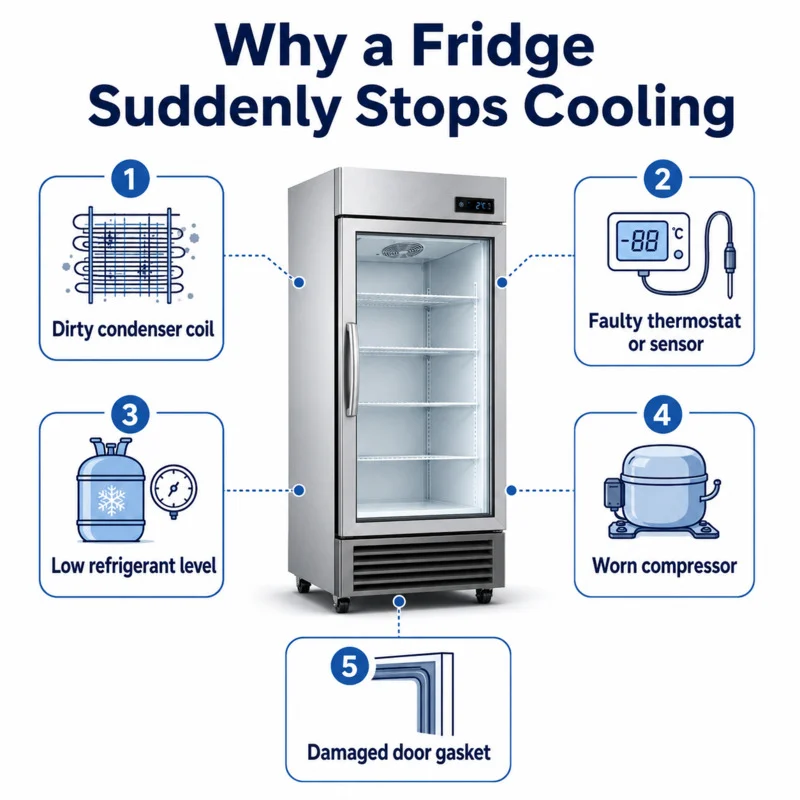
A commercial fridge may stop cooling when airflow is restricted, temperature controls fail or key refrigeration components lose performance.
Some faults develop gradually, while others cause the unit to lose temperature within a short period.
Common factors include:
- Dirty condenser coil: Dust and grease prevent heat from leaving the system, causing the compressor to overheat or shut down.
- Faulty thermostat or sensor: Incorrect temperature readings may stop the compressor from running at the required time.
- Low refrigerant level: A leak reduces cooling capacity and prevents the fridge from reaching its set temperature.
- Worn compressor: An ageing or damaged compressor may continue running without producing enough cooling pressure.
- Damaged door gasket: Gaps around the door allow cold air to escape and warm air to enter the cabinet.
Find out the causes of why the fridge leaking water and the ideal refrigerator temperature celcius when in usage for your business.
5 Quick Checks Before Booking a Fridge Repair
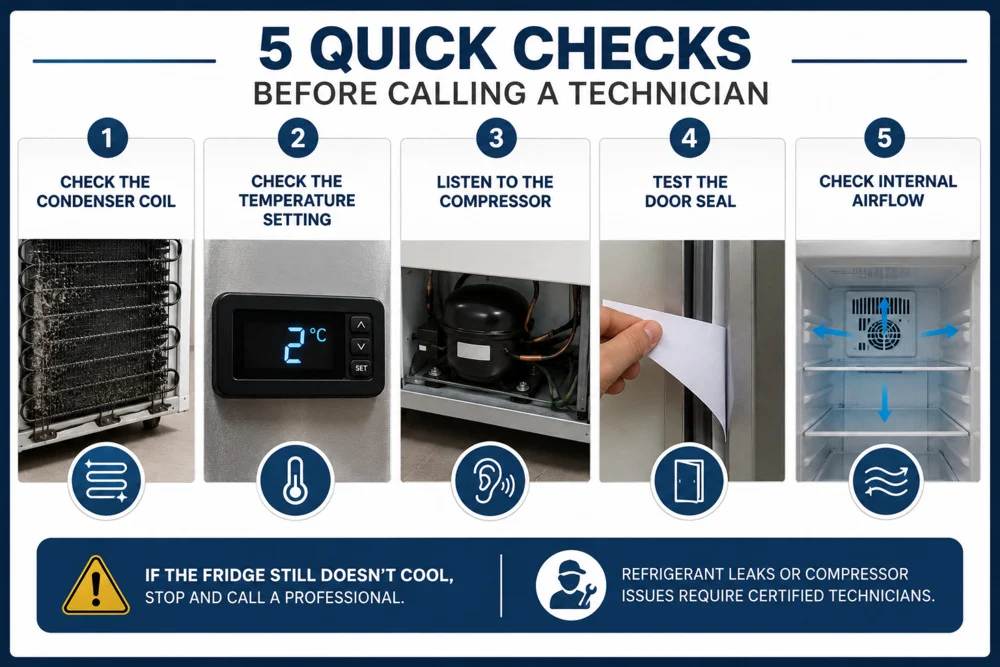
A cooling problem does not always mean the compressor has failed. These checks can uncover airflow, temperature-setting and maintenance issues before stock temperatures continue rising.
1. Inspect the condenser coil
Check behind or beneath the unit for dust, grease or debris. A blocked coil traps heat and may cause the fridge to run continuously without cooling properly.
2. Check the temperature setting
Confirm the thermostat dial or digital controller has not been changed accidentally. Reset it to the normal operating temperature and monitor the cabinet.
3. Listen to the compressor
A compressor that hums constantly, repeatedly clicks or fails to start may indicate overheating, a faulty relay or a more serious component problem.
4. Test the door seal
Look for tears, gaps or warped sections along the gasket. Close the door over a sheet of paper. Little or no resistance when pulling it out suggests cold air may be escaping.
5. Restore internal airflow
Move products away from the air vents and avoid overloading the shelves. Blocked circulation creates warm spots even when the refrigeration system is still operating.
Refrigerant leaks and sealed-system faults require trained handling and should not be opened or repaired without a qualified refrigeration technician.
6 Warning Signs of Commercial Fridge Problem Require Professional Repair
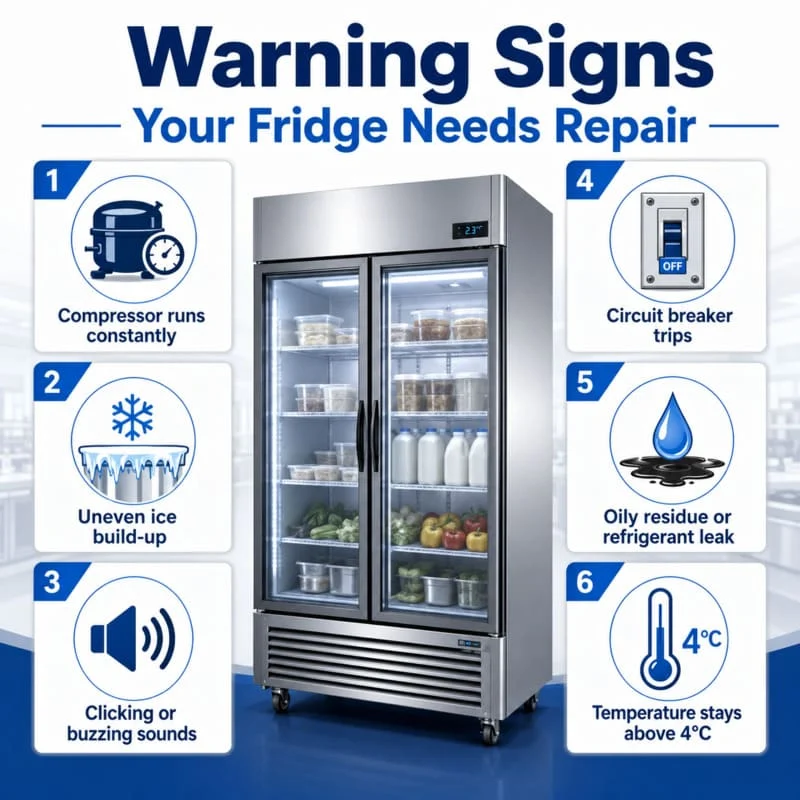
Arrange a technician immediately when the fridge runs continuously, develops uneven frost, repeatedly trips the circuit breaker or fails to keep stock at a safe temperature.
Warning signs that need urgent attention include:
- The compressor keeps running without reaching the set temperature
- Ice forms heavily on one section of the cabinet
- The unit makes repeated clicking, buzzing or knocking sounds
- The circuit breaker trips more than once
- Oily residue or refrigerant leakage appears near the pipework
- The cabinet temperature stays above 4°C and continues rising
Basic checks are only suitable when the fridge feels slightly warmer than normal and there are no unusual sounds, smells or visible leaks.
Continued operation during a compressor, electrical or refrigerant fault can increase repair costs and place stored products at risk.
Cold rooms, display chillers and high-capacity commercial freezers require faster action because a small temperature change can affect a larger volume of stock.
Once the unit stops holding temperature, move vulnerable products to working cold storage and arrange an inspection.
Get a same-day assessment from Solid Cool before warm stock becomes wasted stock.
How Solid Cool Restores Commercial Fridge Cooling
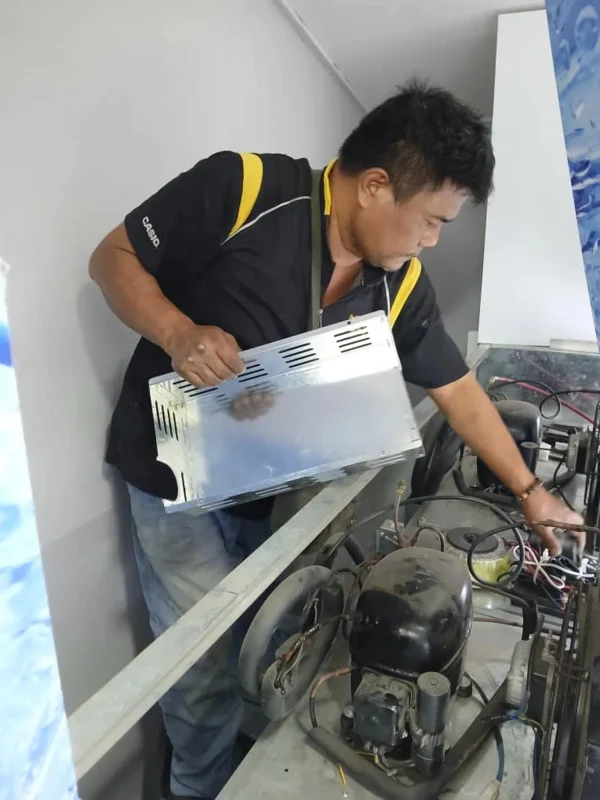
Solid Cool provides commercial refrigeration repair across Malaysia, helping businesses restore safe temperatures before cooling faults lead to larger stock losses or extended downtime.
Technicians respond 24 hours a day, 365 days a year, covering Solid Cool equipment and other commercial refrigeration brands already installed on site. Each service call follows a clear repair process:
- Check the condenser coil, thermostat, airflow and electrical components
- Test the refrigerant level and cooling pressure
- Identify the failed component before recommending replacement
- Explain the fault and required repair clearly
- Restore the unit and confirm that it can hold the correct temperature
This diagnostic approach prevents unnecessary part changes and gives businesses a confirmed repair plan. We also support cold rooms, confectionery showcases and commercial kitchen refrigeration used by supermarkets, restaurants and convenience stores.
With experience in large commercial refrigeration installations and nationwide servicing since 1997, Solid Cool can prioritise urgent breakdowns, document the fault properly and recommend further action when repair alone is no longer cost-effective.
Commercial Fridge Not Cooling? Take Action Before the Damage Spreads
A commercial fridge that cannot hold its temperature can quickly affect stock quality, daily operations and customer service. Continued operation may place extra strain on key components, turning a manageable fault into a larger and more expensive breakdown.
Solid Cool helps businesses decide on the most practical next step, whether the unit can be repaired, requires a part replacement or is no longer cost-effective to keep running. Clear recommendations allow business owners to control repair costs and reduce further disruption.
Contact Solid Cool now to arrange an urgent commercial fridge inspection before the cooling problem affects more stock and sales.
Frequently Asked Questions About Why Your Fridge Is Suddenly Not Cold
1. Why is my fridge suddenly not cold but still running?
The usual causes are a dirty condenser coil, low refrigerant, a faulty thermostat or restricted airflow, which Solid Cool checks during the initial diagnosis.
2. How long can stock stay safe once a commercial fridge stops cooling?
Once the cabinet rises above 4°C, move temperature-sensitive stock immediately and arrange an urgent inspection to reduce spoilage risk.
3. Is a commercial fridge not cooling always a compressor problem?
No, Solid Cool often finds the fault in the condenser coil, thermostat, refrigerant system, airflow or door gasket before the compressor itself.
4. Should I repair or replace an old commercial fridge?
Solid Cool assesses the unit’s age, repair history, component condition and operating cost before recommending repair or replacement.
5. Does Solid Cool service brands other than its own equipment?
Yes, Solid Cool repairs commercial refrigeration units from other manufacturers alongside its own equipment range.